

For example, it often happens with accounts payable when the account is not credited when goods purchased contra asset account on credit don’t make it into the ledger. Since accounts payable are short-term debts owed to supplies or vendors, it involves many moving invoices, which sometimes get lost in the shuffle. A fixed-asset purchase wouldn’t get entered as an operating expense because it’s not a day-to-day expense the company incurs. Also, fixed-asset purchases belong on the balance sheet, while operating expenses belong to the income statement.

Preventing Transposition Errors
In this article, we’ll define transposition errors, provide examples, explain how to detect and correct them, and share best practices to avoid them entirely. These errors are often unintentional and can occur during manual data entry or when transferring information between systems. It organizes transactions, expenses, and income systematically, reducing the chance of errors from missing or misclassified data.
Error Correction Example

As mentioned in the intro, data adp tips distribution (a.k.a “fat finger moments”) can lead to more treacherous consequences in high-risk industries. By incorporating these strategies into regular practice, businesses and individuals can significantly reduce the risk of transposition errors muddling their financial data. It’s about creating a culture of accuracy and verification that values the detection and correction of these seemingly minor errors that can lead to major headaches down the line. Trial balances serve as the bedrock of financial reporting, providing a snapshot of a company’s ledger balances at a specific point in time.
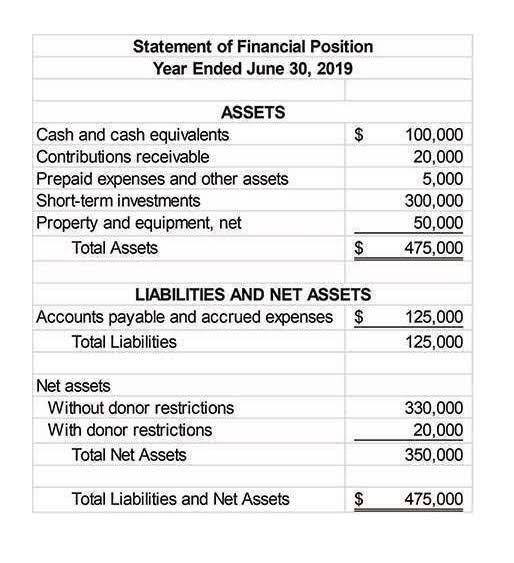
Identification of Transposition Errors
It is used to prepare the financial statements, including the income statement, balance sheet, and statement of cash flows. The financial statements provide information about the company’s assets, liabilities, equity, revenues, and expenses. There are Insurance Accounting many ways to prevent and spot accounting errors before they can slow you down. To avoid accounting errors, use bookkeeping best practices and always double-check your work. Making changes to financial data after the close date could result in future problems for reconciling your books and generating accurate financial statements.

Correction Techniques
- In conclusion, transposition errors, while often resulting from seemingly minor mistakes, carry significant legal and ethical implications in the finance and investment industries.
- To prevent transposition errors, it is recommended to double-check all figures before recording them.
- Organize physical and digital documents (invoices, receipts, contracts) in a logical, easy-to-navigate system.
- Another error that can affect the trial balance is a misstatement in the balance sheet.
- A transposition error definition in accounting refers to a mistake that occurs when two digits or more are accidentally swapped or reversed in value.
- Regularly reviewing records and monitoring discrepancies is also crucial for early detection and correction.
- Similarly, in scientific research, a transposed digit in a crucial calculation could lead to inaccurate results and potentially impact the validity of an entire study.
OCR technology converts scanned or photographed images of text into editable and searchable data. Many OCR software applications include error detection features that identify potential transposition errors, such as swapped digits. By using OCR software, you can efficiently detect and correct error of transposition transposition errors in large volumes of digitized documents.
- This site is not a recommendation nor an offer to sell (or solicitation of an offer to buy) securities in the United States or in any other jurisdiction.
- The impact of transposition errors on data accuracy can be far-reaching, affecting decision-making, reputation, compliance, finances, and operational efficiency.
- Share your writing with trusted friends, colleagues, or writing groups, and ask them to review it for any transposition errors.
- While each strategy has its merits, a combination of double-checking and automation appears to be the most effective approach in preventing transposition errors.
- An omission error, or a false negative, is the accounting problem of forgetting an entry like a purchase or sale.
- In this section, we will explore some effective strategies from different perspectives and provide in-depth information on how to implement them successfully.
- To avoid transposition errors, it is crucial to understand the common types and develop effective strategies to spot and rectify them.
- In numerical data, transposition errors are more prevalent, often lurking within long sequences of numbers.
- A transposition error in music refers to the incorrect shifting of notes or chords from one pitch level to another.
- To avoid such errors, double-checking all the information entered on tax returns and utilizing tax software with built-in error-checking features can greatly reduce the likelihood of transposition errors.
- It is therefore crucial to implement best practices to correct and prevent such errors.
- Transposition errors are a common occurrence in various fields that involve data entry, such as accounting, data analysis, and even everyday typing tasks.
A misplaced digit or an accidental swap of numbers in financial statements, invoices, or tax calculations can result in incorrect figures, leading to financial losses for individuals or businesses. For example, a transposed digit in an invoice could result in an overpayment or underpayment, causing cash flow issues or disputes between parties. To avoid such errors, implementing automated systems that cross-validate financial data can significantly reduce the risk of transposition errors.
- By the end of this article, you will have a solid understanding of transposition errors and be equipped with the knowledge to prevent and address them effectively.
- Additionally, taking breaks between proofreading sessions can provide a fresh perspective and increase accuracy.
- By presenting data in a visual format, such as charts or graphs, users can quickly identify any inconsistencies or errors.
- Although a simple mistake, if undetected, it can lead to a cascade of inaccuracies across financial documents.
- In a high-profile court case, a transposition error in a crucial piece of evidence led to the wrongful conviction of an innocent individual.
The Human Factor in Transposition Errors: Strategies for Prevention
Understanding the nature of transposition errors and their potential impact is crucial in order to develop effective strategies for prevention. While each of the aforementioned strategies offers valuable insights into detecting and mitigating reversal errors, the best approach lies in adopting a holistic methodology that combines multiple techniques. Transposition errors in written communication and literature can have significant implications, ranging from misinterpretation to legal consequences. Understanding the different types of transposition errors and implementing strategies to minimize their occurrence is essential for maintaining accuracy and clarity in our written works.